

Native Ads vs Sponsored Content vs Display Ads vs Remarketing: What’s the Difference?

Digital advertising terms confuse even experienced marketers. A survey by Copy Blogger found that 49% of businesses do not understand native advertising. Another 24% barely know what it is. Only 3% feel confident using it. This confusion costs businesses chances to reach audiences through less pushy, more effective ad formats.
The problem goes beyond end users struggling to tell ads from content. Marketing professionals regularly mix up native ads, sponsored content, display ads, and remarketing ads. When digital marketing strategies depend on precise execution, using the wrong terms leads to poorly planned campaigns and missed chances.
This guide breaks down each ad format with clear definitions, real examples, and practical tips. You will learn when to use each type and how they fit into your broader marketing plan.
What Are Native Ads?
Native ads match the look, feel, and style of the platform they appear on. Unlike banner ads that clearly look like ads, native ads blend in with the content around them.
The key trait of native advertising is how it fits the context. A native ad on a news website looks like a news article. On social media, it looks like a regular post. On shopping sites, it looks like a product listing.
Laws require native ads to include labels like “Sponsored,” “Promoted,” or “Advertisement.” However, these labels are often small and easy to miss.
Types of Native Advertising Formats
Recommended Content Widgets: These show up after articles with titles like “You Might Also Like” or “Recommended Reading.” Platforms like Taboola and Outbrain focus on this format. They drive traffic to sponsored articles or outside websites.
In-Feed Units: These are sponsored posts that appear right in content feeds. They match the style of the surrounding content. This is the most common form of native advertising on publisher websites.
Promoted Listings: Shopping platforms use these to highlight sponsored products in search results or category pages. Amazon’s native ads are a well-known example.
Custom Native Ads: These adapt to different publisher sites while keeping consistent branding. Google’s DoubleClick offers this format. It lets advertisers run campaigns across multiple platforms with automatic style changes.
Social Media Native Ads: Promoted posts on Facebook, Instagram, LinkedIn, and Twitter count as native advertising. They match the platform’s regular post format.
Understanding Sponsored Content
Sponsored content is a specific type of native ad. It takes the form of articles, videos, or other editorial content. An advertiser pays to have this content published on another site.
This format sits at the crossroads of content marketing and native advertising. While all sponsored content is native advertising, not all native advertising is sponsored content.
Good sponsored content gives real value to readers while gently promoting a brand or product. The best examples teach, entertain, or inform — rather than hard-sell.

Key Differences Between Native Ads and Sponsored Content
Marketers often mix up these two formats. Here is how they differ:
- Scope: Native advertising is the broader category. Sponsored content is one type within it
- Format: Native ads can be images, videos, or interactive pieces. Sponsored content is mainly editorial
- Strategy: Native ads often serve PPC campaigns. Sponsored content aligns with content marketing goals
- Placement: Native ads appear in many locations. Sponsored content sits in editorial feeds
According to Contently’s research, these formats form a hierarchy. Branded content (all content marketing) contains sponsored content (paid third-party placement). Sponsored content then sits within native advertising (format-matching ads).
Display Advertising Explained
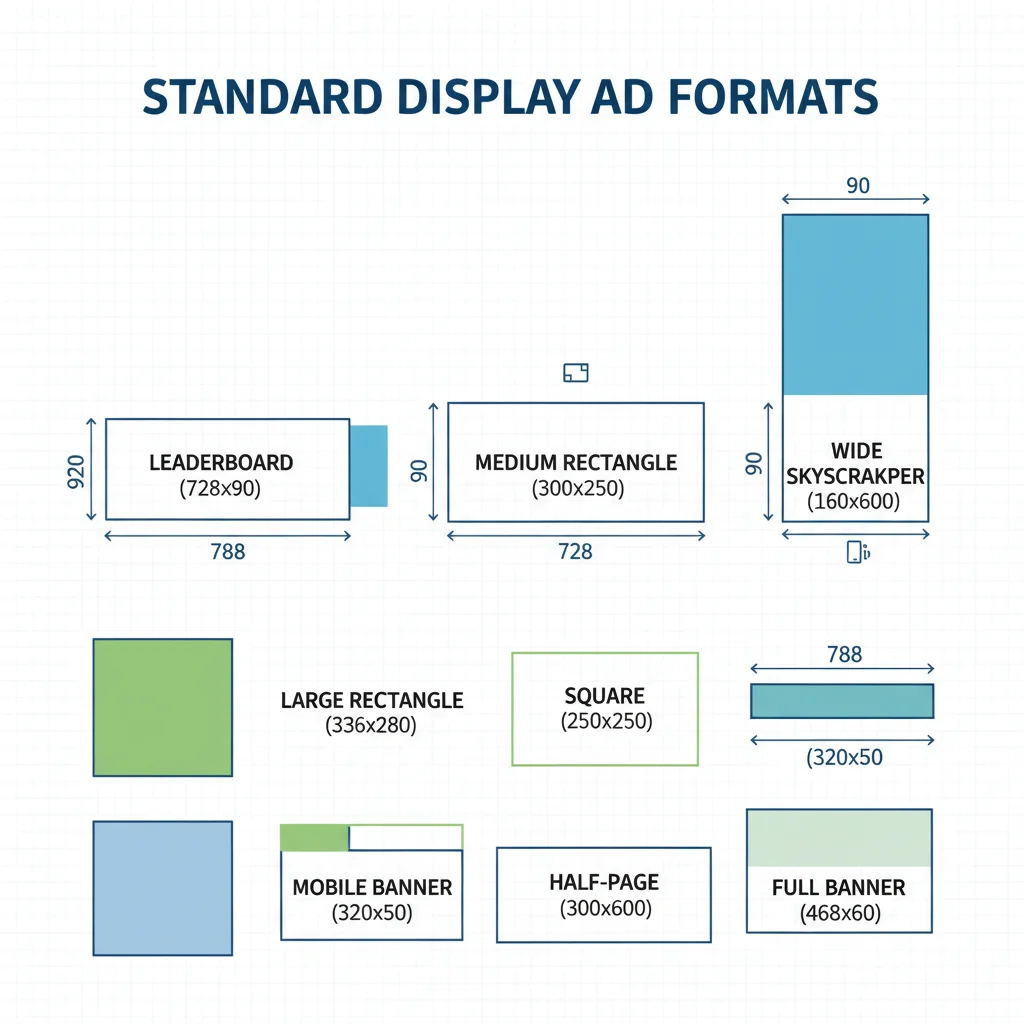
Display ads are the traditional banner ads you see across websites. These include rectangle banners, leaderboards, skyscrapers, and other standard ad formats. They clearly look like ads.
Display advertising mainly works through programmatic buying. Advertisers bid on ad placements in real time. Google’s Display Network is the largest display ad platform. It shows ads across millions of websites.
Key traits of display ads:
- Standard sizes and formats (320×50, 728×90, 300×250, etc.)
- Clear visual separation from website content
- Focus on visual impact and brand awareness
- Cost-per-click (CPC) or cost-per-impression (CPM) pricing
- Easy to create and launch at scale
Display ads face challenges with banner blindness and ad blockers. However, they still work well for brand awareness campaigns and broad reach goals. Writing strong ad copy greatly boosts display ad performance.
Remarketing Ads: Targeting Previous Visitors
Remarketing ads target users who already visited your website or interacted with your brand. These ads use cookies and tracking pixels to find past visitors. They then serve relevant ads as those users browse other websites.
Remarketing usually uses display ad formats, but the targeting makes it different. Instead of reaching new audiences, remarketing focuses on re-engaging warm prospects who already showed interest.
Types of Remarketing Campaigns
Standard Remarketing: Shows ads to past website visitors as they browse other sites in the display network.
Dynamic Remarketing: Shows the specific products or services that users viewed on your website. This works especially well for online shops.
Remarketing Lists for Search Ads (RLSA): Adjusts search ad bids and messaging for users who visited your site before.
Video Remarketing: Targets users who watched your YouTube videos or visited your channel.
Customer List Remarketing: Uploads email lists to target existing customers with specific messaging.
Remarketing ads usually get higher conversion rates than cold traffic campaigns. That is because they target users who already know your brand. Building smart remarketing lists boosts campaign results significantly.
Performance Comparison: Which Format Works Best?
Each ad format serves different goals and performs differently across key metrics:
Native Advertising Performance
- Click-through rates: 0.16% (versus 0.05% for display)
- Brand lift: Up to 82% increase
- Purchase intent: 18% higher than display ads
- User engagement: 97% higher than banner ads
Native ads are great for building brand awareness and driving engagement without causing ad fatigue. However, they need more creative work and longer production times.
Sponsored Content Performance
- Time on page: 2-3 times longer than display ads
- Social shares: 32% more than traditional ads
- Brand recall: 8.8 times higher than banner ads
- Cost per engagement: 50-70% lower than display
Sponsored content works best for complex products that need explanation. It also suits brands that want to build thought leadership.
Display Advertising Performance
- Average CTR: 0.05-0.10%
- Cost efficiency: Lowest cost per impression
- Reach: Highest potential audience size
- Setup time: Fastest to launch
Display ads still work well for broad brand awareness campaigns. They also suit budget-conscious advertisers who need quick setup.
Remarketing Performance
- Conversion rates: 2-3 times higher than cold traffic
- Cost per conversion: 50-75% lower
- Return on ad spend: 10 times higher than prospecting
- Click-through rates: 0.7% average
Remarketing gives the highest ROI for direct response campaigns. It should be a top priority for any advertiser with enough website traffic.
Choosing the Right Format for Your Goals
The best ad format depends on your campaign goals, budget, and audience:
Brand Awareness Campaigns
Primary choice: Native advertising or sponsored content
Secondary choice: Display advertising for budget-friendly campaigns
Native formats build brand awareness without annoying users. This leads to better brand perception and recall rates.
Lead Generation
Primary choice: Remarketing ads
Secondary choice: Native advertising for cold audiences
Remarketing targets warm prospects who are most likely to convert. Meanwhile, native ads can capture cold traffic without feeling too salesy.
E-commerce Sales
Primary choice: Dynamic remarketing
Secondary choice: Native product listings
Dynamic remarketing shows the exact products users viewed. Native product listings blend naturally with editorial content on relevant publisher sites.
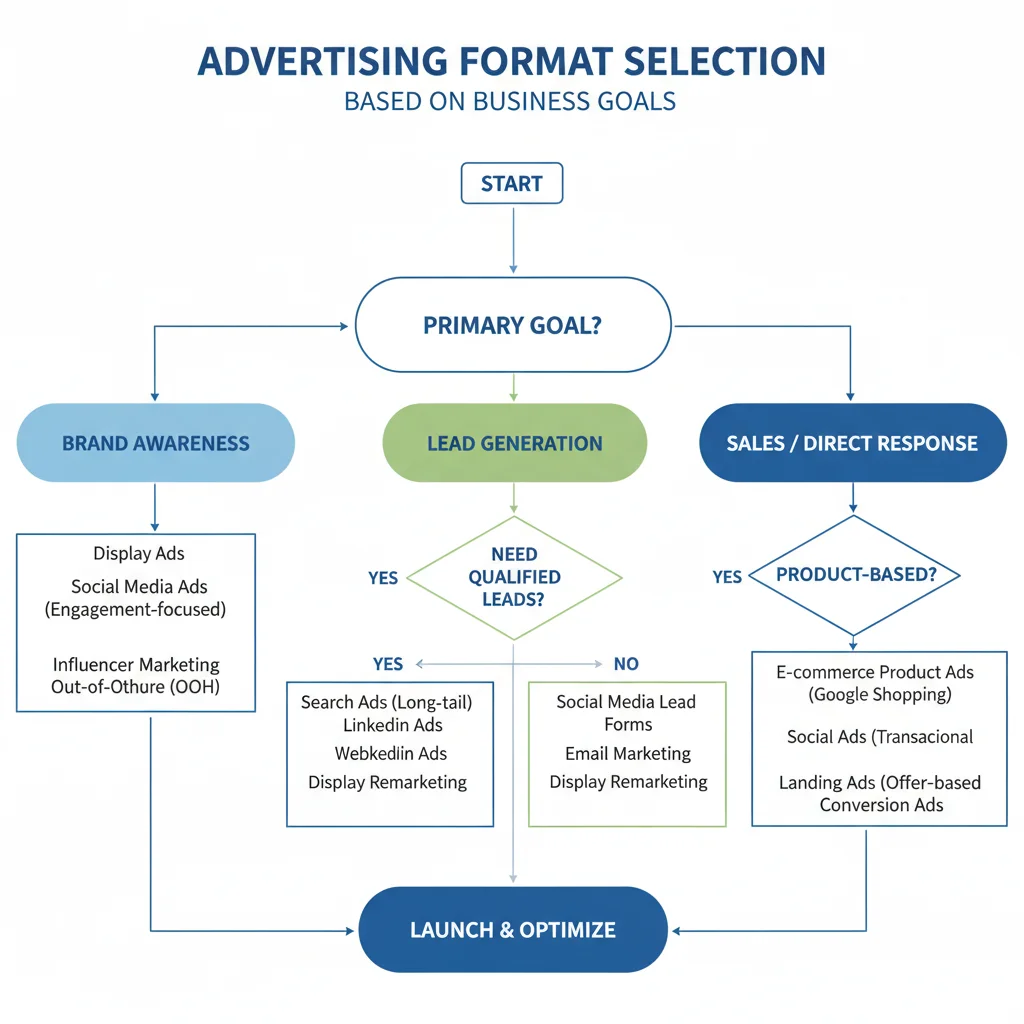
Content Marketing Support
Primary choice: Sponsored content
Secondary choice: Native content widgets
Sponsored content spreads your content marketing to new audiences. Content widgets drive traffic to your own content.
Best Practices for Implementation
Good execution needs attention to format-specific details and user experience:
Native Advertising Best Practices
- Match the publisher’s voice: Study the host site’s writing style, tone, and content format
- Give real value: Focus on teaching or entertaining rather than direct selling
- Use clear disclosure: Include required labels without hurting the native experience
- Test different formats: Try articles, videos, and interactive content
- Think mobile first: Make sure native ads work well across all devices
Sponsored Content Guidelines
- High editorial quality: Match or beat the publisher’s content standards
- Relevant topics: Pick subjects that naturally fit the publication’s audience
- Clear attribution: Include author bylines and company info where needed
- Skip hard sells: Focus on thought leadership and useful insights
- Include practical advice: Give readers tips they can put to use right away
Display Advertising Optimisation
- Test multiple creative versions: Run A/B tests on headlines, images, and calls-to-action
- Use quality visuals: Invest in professional design and eye-catching images
- Set frequency caps: Limit how often users see the same ad
- Target by context: Place ads on relevant websites and content pages
- Aim for viewability: Choose ad spots with high viewability rates
Remarketing Campaign Tips
- Segment audiences: Create different campaigns for different visitor actions
- Adjust messaging: Tailor ad copy based on what users viewed or did on your site
- Set good frequency caps: Avoid overwhelming past visitors with too many ads
- Use sequential messaging: Tell a story across multiple ad views
- Exclude converters: Remove users who already completed the desired action
Knowing these differences helps you make better digital marketing strategy choices. As a result, you see stronger campaign results across all formats.
Common Mistakes to Avoid
Even experienced marketers make errors with different ad formats. Here are the most costly mistakes:
Native Advertising Pitfalls
- Too promotional: Making ads too salesy defeats the purpose of native integration
- Poor platform matching: Not adapting content style to each publisher’s audience
- Weak disclosure: Hiding or shrinking required advertising labels
- Clickbait tactics: Using misleading headlines that let users down
- One-size-fits-all approach: Using the same content across different platforms
Sponsored Content Errors
- Ignoring editorial rules: Not following publisher requirements and standards
- Weak value: Creating content that only helps the advertiser
- Poor topic choice: Picking subjects that do not fit the publication’s audience
- Not enough promotion: Failing to share sponsored content through your own channels
- No measurement: Not tracking engagement and conversion metrics
Display and Remarketing Mistakes
- Ignoring banner blindness: Creating ads that look too obviously promotional
- Poor targeting: Showing the wrong ads to the wrong audiences
- Ad fatigue: Running the same creative for too long without refreshing
- Weak tracking: Not properly measuring view-through conversions
- Broad remarketing lists: Including all website visitors regardless of behaviour quality
Avoiding these mistakes takes ongoing performance monitoring and readiness to adjust campaigns based on data.
Future of Digital Advertising Formats
Digital advertising keeps changing as user behaviour shifts and new tech appears. Several trends shape the future of these ad formats:
Increasing Privacy Regulations
GDPR, CCPA, and similar rules limit tracking options. This affects remarketing campaigns the most. Advertisers need to adapt by:
- Building first-party data strategies
- Focusing on contextual targeting
- Investing in customer relationship platforms
- Developing privacy-friendly tracking methods
Native Advertising Growth
As users become more ad-aware, native advertising grows in importance. Expect growth in:
- Video native advertising
- Interactive native experiences
- Voice-activated native content
- Augmented reality native ads
Artificial Intelligence Integration
AI improves all ad formats through:
- Automated content creation for native ads
- Predictive audience targeting
- Real-time creative fine-tuning
- Advanced attribution modelling
Staying ahead of these trends takes constant learning and testing. Following new digital marketing trends helps advertisers adjust their strategies well.
Success in digital advertising means knowing each format’s strengths and best uses. Native advertising and sponsored content build brand awareness without annoying users. Display advertising gives broad reach at lower costs. Remarketing delivers the highest conversion rates by targeting warm prospects.
The key is matching ad formats to campaign goals while keeping creative quality and user experience high. As digital advertising gets more advanced, advertisers who grasp these differences will create stronger campaigns and get better results.
Ready to build an ad strategy that uses the right format for each goal? Contact our team to discuss how these different approaches can work together in your marketing campaigns.
Frequently Asked Questions
What’s the main difference between native ads and sponsored content?
Native advertising is the broader category. It includes any ad designed to match its surrounding content. Sponsored content is specifically editorial content (articles, videos) that advertisers pay to publish on third-party sites. All sponsored content is native advertising, but native ads can also be product listings, social posts, or other formats.
Which advertising format has the highest conversion rates?
Remarketing ads usually get the highest conversion rates. They are often 2-3 times higher than cold traffic campaigns. This is because they target users who already showed interest in your brand or products.
Are native ads more expensive than display ads?
Native ads often cost more upfront because of creative needs and premium placements. However, they usually deliver better engagement and lower cost-per-conversion. Display ads are cheaper to make and launch but may show weaker performance metrics.
How do I know if my native advertising is working?
Track engagement metrics like time on page, click-through rates, and social shares alongside conversion metrics. Native ads should show higher engagement rates than display ads and lower cost-per-engagement. Brand lift studies can measure the awareness impact.
Can I use remarketing with native advertising formats?
Yes. You can combine remarketing targeting with native ad formats. Many platforms let you show native-style ads to your remarketing audiences. This gives you the targeting precision of remarketing with the user experience benefits of native advertising.
What disclosure requirements apply to native advertising?
Native ads must clearly show that they are advertisements. Use labels like ‘Sponsored,’ ‘Promoted,’ ‘Advertisement,’ or ‘Paid Content.’ The label should be clear enough that users can easily spot the content as advertising before they engage with it.