

The Most Important Google Ranking Signals in 2026

There’s no question about it – search engine optimisation drives real business results.
A study from BrightEdge found that organic traffic beats out all other marketing channels by a significant margin, driving 51% of all online visitors to B2B and B2C sites. In comparison, paid search only accounted for 10% of traffic while social media drove just 5%.
Your target audience is searching right now for products or services your business offers. Most turn to Google as their preferred search engine. Google dominates the search landscape, taking nearly 92% of global search queries according to StatCounter data:
Ranking for target keywords that are relevant to your business positions your brand in front of prospects ready to buy. That kind of visibility translates directly to revenue. But simply having a website isn’t enough to rank for your keywords. Google relies on complex algorithms that weigh hundreds of different factors to determine rankings.
Fortunately, you only need to focus on a handful as there are certain signals that matter more than others. Optimising these gives your site a far more competitive advantage in search and can protect your rankings from future algorithm updates. Avoiding common SEO mistakes is equally important for maintaining strong search performance.
Here we examine the major ranking signals in Google and how you can outrank your competitors.
Content Quality and Optimisation
Google continues to refine its algorithm to deliver the most relevant results possible. Panda was one of the first major algorithm updates that shook up search results. The update targeted “thin” or low-quality sites that provided little value to users while rewarding sites deemed high-quality with better rankings.
The implications were clear – Google only wanted quality pages in its search results. The Hummingbird update took things further by judging context through semantic search. This means more value is placed on relevance and optimisation. In-depth posts that cover a topic thoroughly will always beat thin or low-quality content.
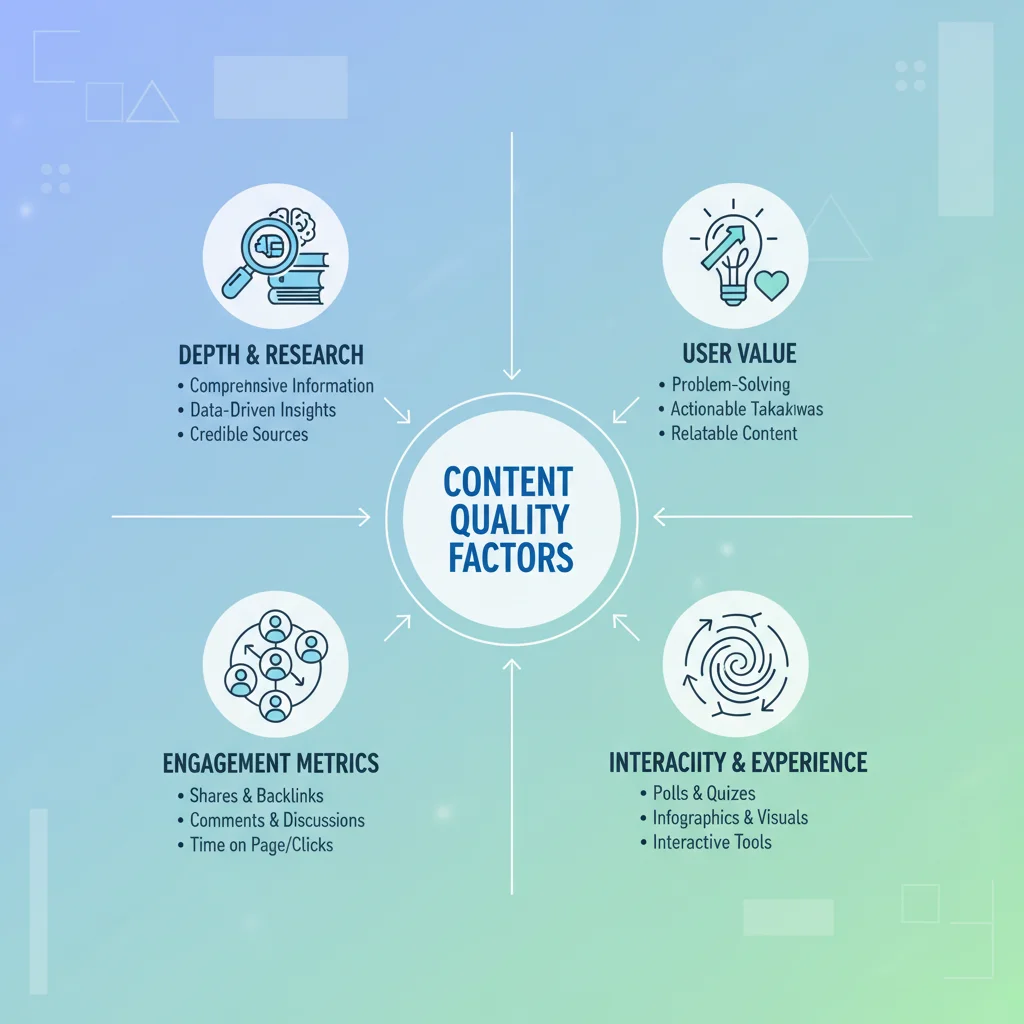
Content is easily one of the most important ranking signals. Here are the parts of your content that matter most:
Strategic Keyword Usage
Optimise all on-page factors of your site to include your target keyword and related phrases. These include your page titles, headings, meta descriptions, and image alt text. But avoid over-optimisation as this can lead to ranking penalties.
Here’s what a well-optimised page looks like:
Content Length and Depth
Data from serpIQ found a strong correlation between content length and rankings.
This doesn’t mean longer content automatically ranks higher – only that a correlation exists between the two. Content length largely depends on the topic. One approach is to analyse pages that already rank for your keywords to gauge appropriate length.
Value and User Intent
Online users turn to search engines for information. If users bounce immediately from your pages, it indicates the content lacks quality. The key to ranking lies not only in relevance but also value.
Google seeks useful and informative content. Aim to be incredibly thorough by adding relevant images, including references, and conducting original research to back your claims. Following proper blog optimisation steps ensures your content meets these standards.
Backlink Profile and Authority
All other factors being equal, the more quality links you have, the higher you rank in search results. This holds true today but with important exceptions. Thanks to the Penguin update, spamming your site using automated tools will likely lead to ranking penalties. It’s a clear indication of manipulative tactics that Google actively penalises.
The key to earning quality links that boost rankings comes down to content marketing – creating and distributing valuable, relevant, and consistent content to attract and retain a clearly defined audience.
The kind of content that drives people to take action is also the kind that gets linked to. When authority sites link to that content, Google ranks those pages higher in search results. Easy link building strategies can help you build this authority systematically.
Link Relevance and Quality
Where your links come from matters enormously. It used to be that you could spam pages with links and see rankings rise. That’s no longer the case as Google’s algorithm examines the actual sources of those links.
A link from a relevant source carries far more weight than a link from a spammy source. Too many low-quality links do more harm than good. Here are strategies to build quality links:
- Content creation: Create compelling content that people want to link to such as detailed guides, infographics, and videos. Focus on providing genuine value for your target audience.
- Manual outreach: Reach out to authority sites in your industry and submit guest posts in exchange for a link back to your site. These links are particularly powerful.
- Submissions: Submit content to press release sites or local business citations (e.g. Google My Business, Yelp). While not as strong as other link types, submissions can still help your site rank higher.
Anchor Text Distribution
Anchor text refers to the clickable text in a link. Just like content on your pages, anchor text tells Google what your pages are about. But spamming pages with exact-match target keyword anchors indicates spam. Google looks for a healthy mix of anchor text containing your target keywords, brand name, and natural variations.
There’s no exact ratio to aim for, but these averages across different industries provide a better idea of what a natural link profile looks like:
Link Velocity and Natural Growth
If your site is relatively new and experiences a sudden influx of backlinks, it raises major red flags indicating automated link building. Instead, aim for steady progression of new links to your site.
Use tools such as Ahrefs or Open Site Explorer to monitor your link profile closely. Increasing your domain authority requires this type of consistent, quality link building approach.
Technical SEO Fundamentals
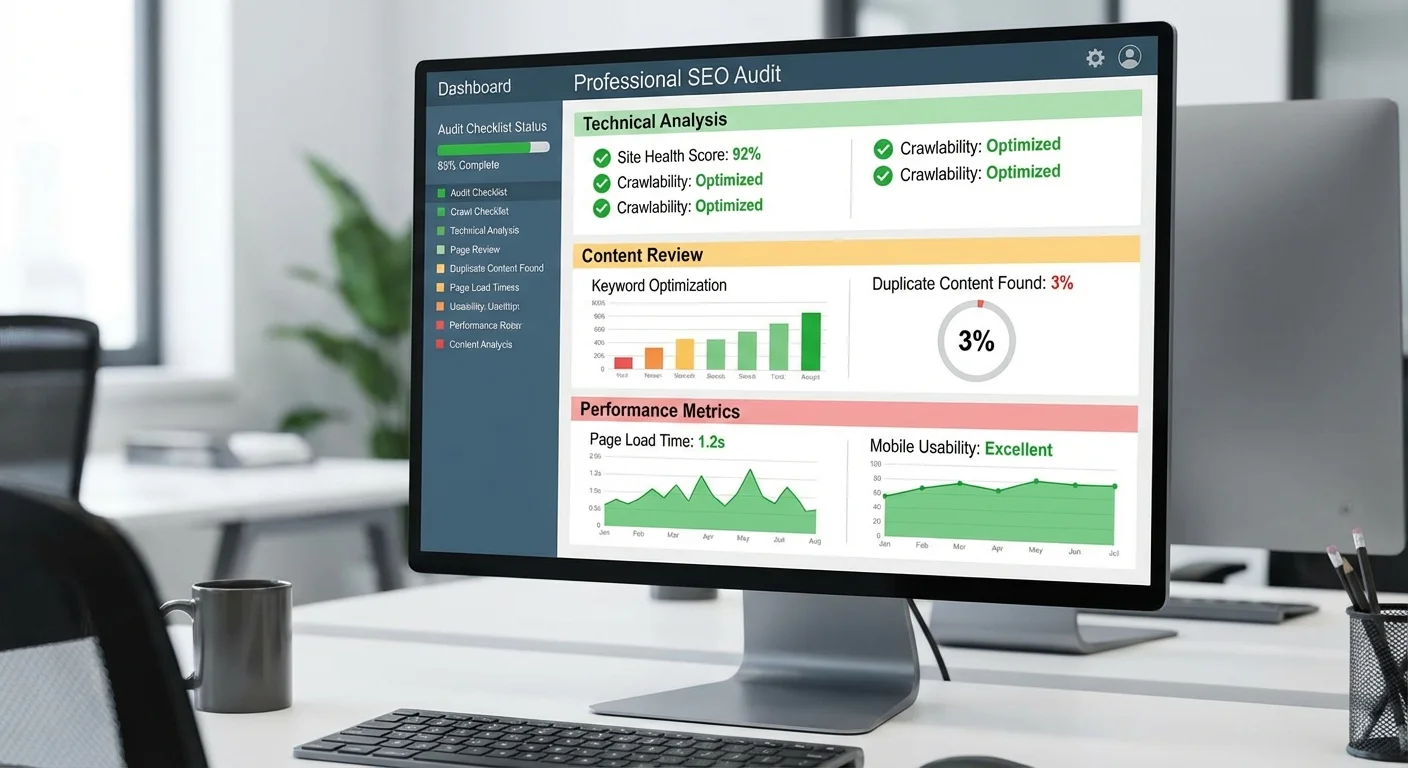
Quality content and relevant backlinks alone can outrank most competition in search results. But Google has placed much more emphasis on technical aspects of websites. Can users access your pages from their devices? Do pages load quickly without long wait times?
Even if your site is well-optimised, you could still rank lower if certain technical aspects fall short. Understanding technical SEO basics is essential for modern search performance.
Mobile-First Optimisation
More people use mobile devices to browse the web than ever before. Data from comScore shows that traffic from mobile devices has overtaken desktop traffic.
To account for this usage shift, Google released a major algorithm update making mobile friendliness a ranking factor. Your site could rank lower in mobile search results if it isn’t optimised for all devices.
The implications are clear – mobile matters. Not making this move could mean losing sales. Google’s recommended configuration is implementing responsive design, a grid-like structure that dynamically adjusts to fit all screen resolutions. Users can easily browse your site from desktops, smartphones, and tablets.
Page Speed Optimisation
Nothing frustrates users more than staring at a blank page waiting for it to load. Online users may have tolerated slow loading pages in the past, but not anymore. Consumers expect fast browsing experiences and data shows 40% will leave a page if it takes longer than three seconds to load.
There’s a strong correlation between bounce rates and page load times:
Google has made page speed a ranking factor so your site could rank lower if it takes too long to load. Here are several ways to improve site speed:
- Minimise HTTP requests
- Reduce server response time
- Use a CDN (content delivery network)
- Minify JavaScript, CSS, and HTML
- Enable browser caching
- Enable gzip compression
- Optimise images
Each of these together will dramatically boost loading times for your site. Even a one-second improvement can translate to more revenue. Understanding why speed matters helps prioritise these optimisations.
Measuring and Tracking Success
Search is a constantly evolving landscape. Google updates its ranking algorithm hundreds of times per year, but certain signals continue to carry more weight than others. These include your site’s content, backlink profile, and technical aspects such as mobile friendliness and loading times.
Prioritise these elements to give your site a major advantage in search results and outrank the competition. Tracking the right SEO KPIs helps you monitor progress across all these ranking factors.
At PWD Digital Agency, we’ve seen these three ranking signals deliver consistent results for our clients across industries. The businesses that focus on content quality, build natural link profiles, and maintain technically sound websites consistently outperform competitors who neglect these fundamentals.
Want to see how your website measures up? Our team can audit your current SEO performance and identify opportunities for improvement across all three ranking signal areas.
Frequently Asked Questions
What are the most important Google ranking factors in 2026?
The three most important ranking factors remain content quality, backlinks from relevant sources, and technical SEO including mobile optimisation and page speed. These have consistently been the strongest signals for search rankings.
How long should my content be to rank well in Google?
Content length varies by topic, but research shows longer, more detailed content typically ranks better. Focus on covering topics thoroughly rather than hitting a specific word count. Analyse competing pages for guidance on appropriate length.
Are backlinks still important for SEO?
Yes, backlinks remain one of the strongest ranking signals. However, quality matters more than quantity. Links from relevant, authoritative sites in your industry carry much more weight than numerous low-quality links.
How fast should my website load for good SEO?
Your website should load in under 3 seconds, as 40% of users will leave slower sites. Google considers page speed a ranking factor, so faster sites have a competitive advantage in search results.
Is mobile optimisation really necessary for SEO?
Mobile optimisation is essential as Google uses mobile-first indexing and mobile traffic now exceeds desktop traffic. Sites that aren’t mobile-friendly will rank lower in search results.
How do I know if my SEO efforts are working?
Track key metrics like organic traffic growth, keyword rankings, bounce rate, and conversion rates. Use tools like Google Analytics and Search Console to monitor performance and identify areas for improvement.