

The State of Voice Search in 2026: What’s Changed

Voice search is changing how people find information online. With 72% of voice device users making it part of their daily routine, businesses can’t afford to ignore this shift. Voice search isn’t just a trend – it’s fundamentally reshaping SEO strategy and creating new opportunities for smart businesses to capture more leads.
The way people search with their voice differs dramatically from typing queries. This means your current SEO strategy needs updates to stay competitive. We’ll show you exactly how voice search works and what you need to do to optimise for it.

How Voice Search Actually Works
Voice search allows users to speak their queries instead of typing them. Whether through Siri, Alexa, Google Assistant, or Cortana, these virtual assistants process spoken language using natural language processing technology.
Here’s what happens when someone asks their device a question: The assistant captures the audio, converts speech to text, processes the query’s intent, searches for relevant information, and delivers an answer verbally. The entire process takes seconds.
When we tested asking Siri for “best cleaning services in Sydney”, it immediately returned a curated list of options:
For businesses, this represents a direct pipeline to potential customers. When your business appears in these results, you’re capturing leads at the exact moment they’re looking for your services.
Voice Search vs Traditional SEO: The Key Differences
Voice searches follow conversational patterns that differ significantly from typed queries. While desktop users might search “digital marketing agency Perth”, voice users ask “what are the best digital marketing agencies near me?”
This shift impacts your keyword research strategy. You need to think about how people actually speak, not just how they type.
Compare this to a traditional desktop search:
Desktop searches show over 20 million results. Voice searches typically present just the top few options. This makes ranking in position zero – the featured snippet – more important than ever.
Featured Snippets Drive Voice Results
Virtual assistants primarily pull answers from featured snippets and top-ranking pages. When Google displays a featured snippet for a query, that content often becomes the voice search answer.
This means optimising for featured snippets should be central to your voice search strategy. Structure your content to directly answer common questions in your industry.
Optimising Your Website for Voice Search
Focus on Conversational Keywords
Voice searches use natural, conversational language. Instead of targeting “web design company”, optimise for “who are the best web design companies near me?” or “how much does web design cost?”
Start by researching question-based keywords using tools like Answer the Public or Google’s “People also ask” section. These questions represent real voice search queries.

Improve Page Speed and Mobile Performance
Voice searches happen predominantly on mobile devices. Your website needs to load quickly and perform flawlessly on smartphones and tablets.
Google prioritises fast-loading, mobile-optimised sites for voice search results. If your site takes more than 3 seconds to load, you’re likely losing voice search opportunities.
Use tools like Google PageSpeed Insights to identify and fix performance issues. Focus on optimising images, minimising code, and choosing fast hosting.
Structure Content for Easy Understanding
Virtual assistants need to quickly understand and extract information from your content. Use clear heading structures, bullet points, and concise paragraphs.
Answer questions directly and early in your content. If someone asks “what is technical SEO?”, provide a clear definition in the first paragraph, then elaborate with details.
Local SEO and Voice Search
Voice searches often include location intent. People ask “where’s the nearest coffee shop?” or “find accountants in my area.” This makes local SEO optimisation essential for voice search success.
Perfect Your Google Business Profile
Your Google Business Profile directly feeds information to voice assistants. Ensure every detail is accurate and complete:
- Business name, address, and phone number
- Opening hours and holiday schedules
- Business category and services
- Photos and customer reviews
Inconsistent information across platforms confuses voice assistants and hurts your rankings. Regular audits of your business listings prevent these issues.
Consistent NAP Citations
Your Name, Address, and Phone number (NAP) must match exactly across all online directories, social media profiles, and your website. Voice assistants use this consistency to verify business legitimacy.
Content Strategy for Voice Search
Create FAQ-Style Content
FAQ sections directly address the question-answer format of voice searches. Identify common customer questions and create detailed, helpful answers.
This approach works particularly well for service-based businesses. If you’re a digital marketing agency, create content answering “how long does SEO take?” or “what does social media marketing cost?”
Target Long-Tail, Question Keywords
Voice searches typically contain 4-6 words compared to 2-3 words for text searches. Focus on longer, more specific phrases that match how people naturally speak.
Instead of targeting “SEO tips”, optimise for “what are the best SEO tips for small businesses?” These longer phrases have less competition and higher conversion intent.

Technical Implementation for Voice Search
Schema Markup Implementation
Schema markup helps search engines understand your content context. Implement FAQ schema, Local Business schema, and Article schema to improve voice search visibility.
This structured data makes it easier for voice assistants to extract and present your information accurately.
HTTPS and Core Web Vitals
Security and performance remain foundational ranking factors. Ensure your site uses HTTPS and meets Google’s Core Web Vitals standards for loading performance, interactivity, and visual stability.
Measuring Voice Search Success
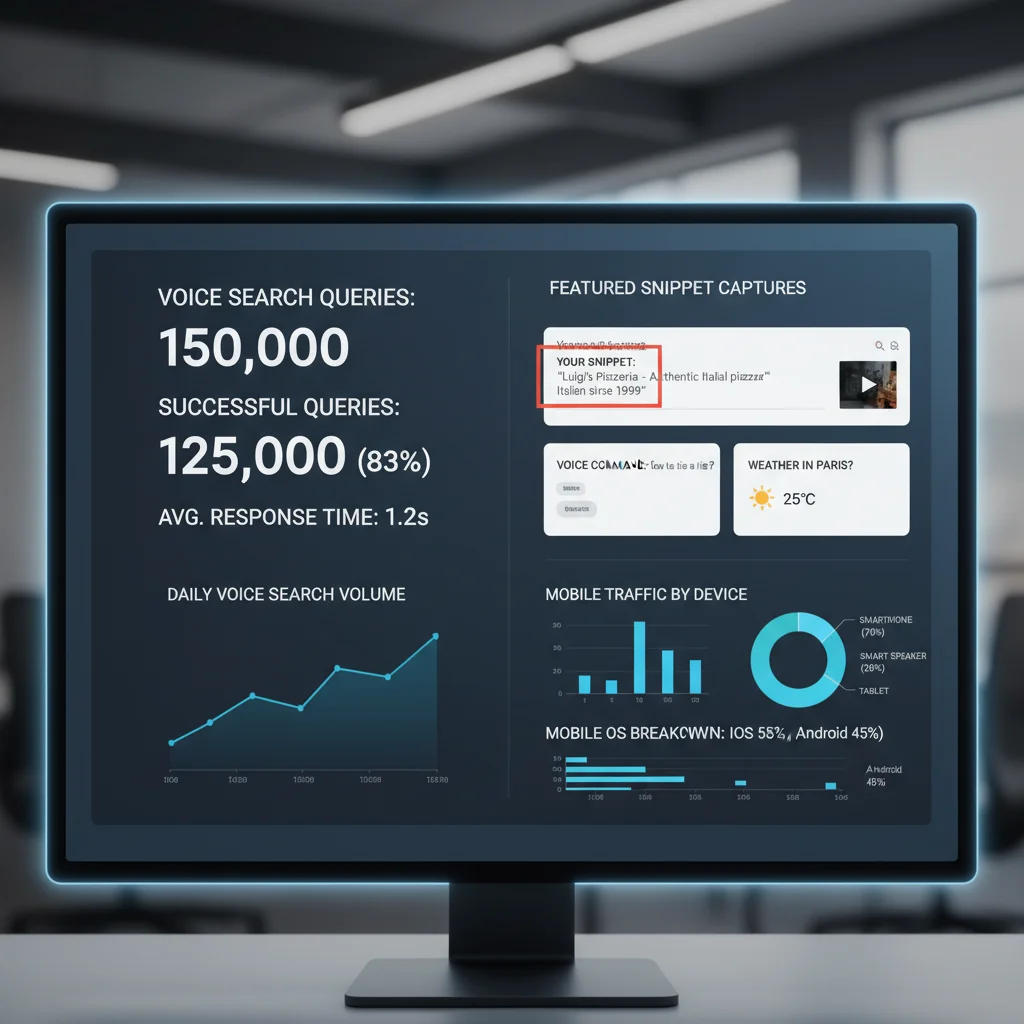
Track voice search performance using Google Search Console’s performance reports. Look for longer, question-based queries in your search terms data.
Monitor featured snippet captures, as these often translate to voice search answers. Tools like SEMrush and Ahrefs can help identify featured snippet opportunities.
Key metrics to track include:
- Conversational keyword rankings
- Featured snippet captures
- Local search visibility
- Mobile traffic increases
Voice search optimisation isn’t separate from traditional SEO – it’s an evolution of it. By adapting your SEO strategy for conversational queries, mobile performance, and local intent, you’ll capture traffic from both traditional searches and the growing voice search market.
The businesses that optimise for voice search now will have a significant advantage as this technology becomes even more prevalent. Start with your most important pages and gradually expand your voice search optimisation across your entire site.
Frequently Asked Questions
How do I optimise my website for voice search?
Focus on conversational keywords, improve page speed, create FAQ-style content, and optimise your Google Business Profile. Voice searches use natural language, so target long-tail, question-based keywords that match how people speak.
What’s the difference between voice search and regular search?
Voice searches are typically longer, more conversational, and often include local intent. While desktop users might type “web design company”, voice users ask “who are the best web design companies near me?”
Do voice searches affect local SEO?
Yes, significantly. Many voice searches include location intent like “near me” queries. Having accurate Google Business Profile information and consistent NAP citations across directories is essential for voice search success.
How important are featured snippets for voice search?
Featured snippets are extremely important as voice assistants often read these as answers to voice queries. Optimising content to capture featured snippets should be a core part of your voice search strategy.
What keywords should I target for voice search?
Target question-based, conversational keywords that are 4-6 words long. Focus on how people naturally speak rather than type. Use phrases like “what is”, “how do I”, “where can I find”, and “who are the best”.
How can I measure voice search performance?
Use Google Search Console to track longer, conversational queries. Monitor featured snippet captures and local search visibility. Tools like SEMrush can help identify voice search opportunities and track performance.